Skateboard GB Reveals Results of First National Audit of Skateparks
Skateboard GB has released the detailed findings from its landmark national audit of skateable spaces, offering the most comprehensive picture to date of the UK’s skateboarding infrastructure and its value to communities, making this is the first study of its kind in Europe.
GET THE FULL REPORT HERE
Conducted throughout 2025 in partnership with researchers from Goldsmiths, University of London, and skatepark specialists Betongpark, the study found that there were approximately 1,923 skateable spaces across all 12 UK regions and nations. This included outdoor and indoor skateparks, DIY sites, and significant street‑skating locations, with the aim of understanding their distribution, quality, and community impact.
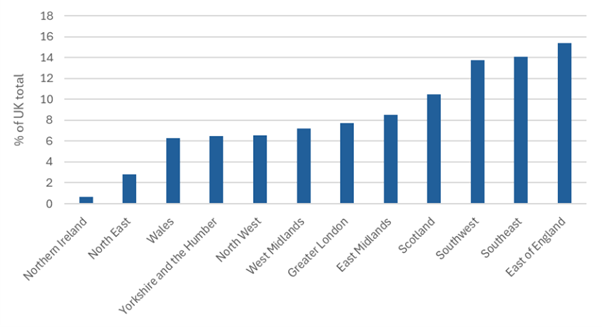
The audit highlights significant variation in provision across the UK. The Southeast, Southwest, East of England, and Scotland have the highest number of skateable spaces, while the Northeast, Northwest, Wales, Yorkshire and the Humber, and Northern Ireland have the fewest. From the data collected, we estimate that the East of England had a total of 292 skateable spaces in 2025, whilst Northern Ireland had just 12 and the Northeast just 54.
During the research one of the main outputs was to understand what makes a high‑quality skatepark. Encouragingly, most sites meet the needs of beginners, offering varied obstacles, flat ground, and good flow through the skatepark – factors also important to more experienced skaters.
However, the study found that provision for talented skaters aspiring to international competition is limited, particularly in outdoor public parks. Only a small number of sites successfully combine inclusive beginner‑friendly design with advanced features. None of the assessed sites meet international competition standards.
The audit identifies clear patterns in how design and construction affect safety, usage, and perceptions of quality:
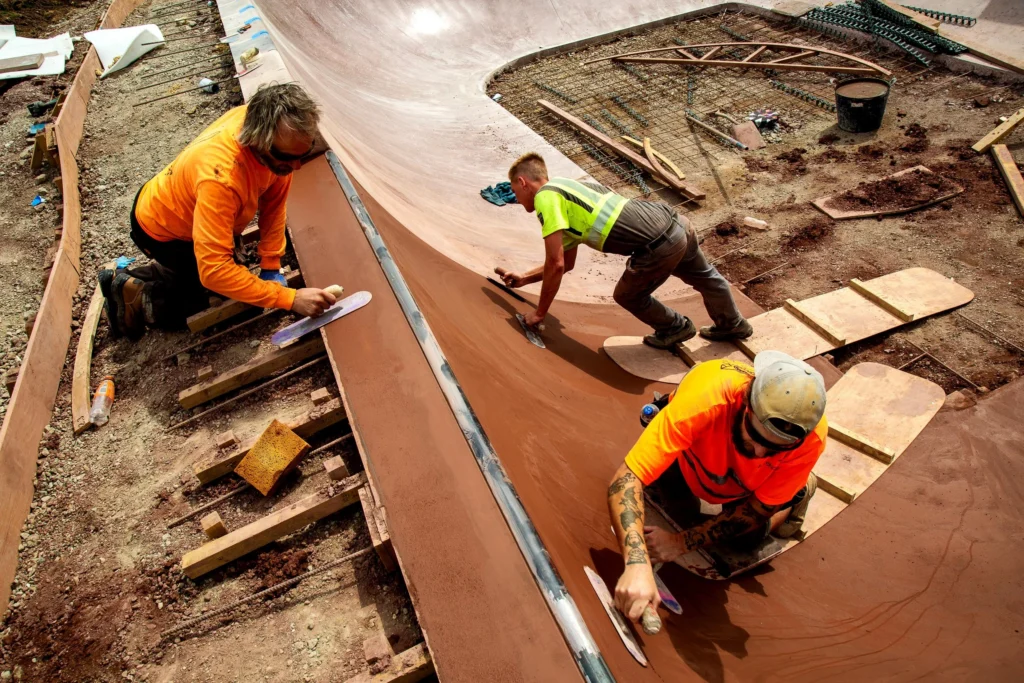
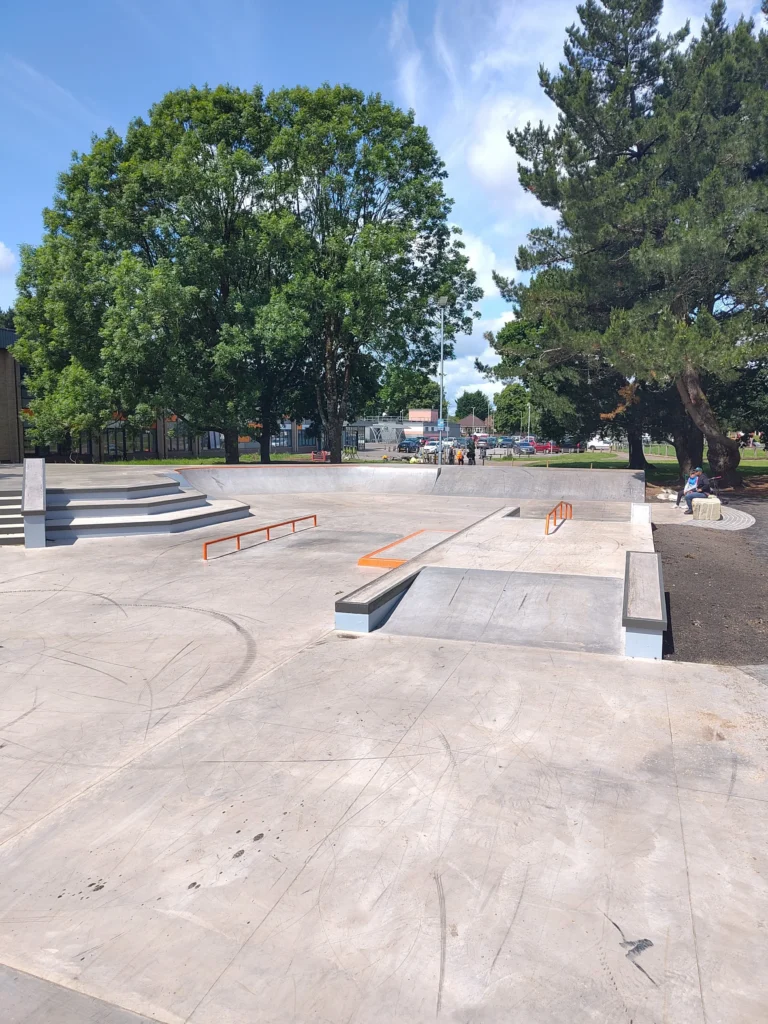
– Skateparks constructed in concrete and positioned in well‑considered, visible locations are positively associated with user perceptions of quality.
-Skateparks comprising of modular ramps on an asphalt base (a construction technique popular in the 1990s–2000s but continuing to occur in some cases today) are more likely to be under-used and have a greater likelihood of anti-social behaviour, due to factors including because of the void space beneath modular ramps. This can lead to abandonment, vandalism and litter, further affecting their usage.
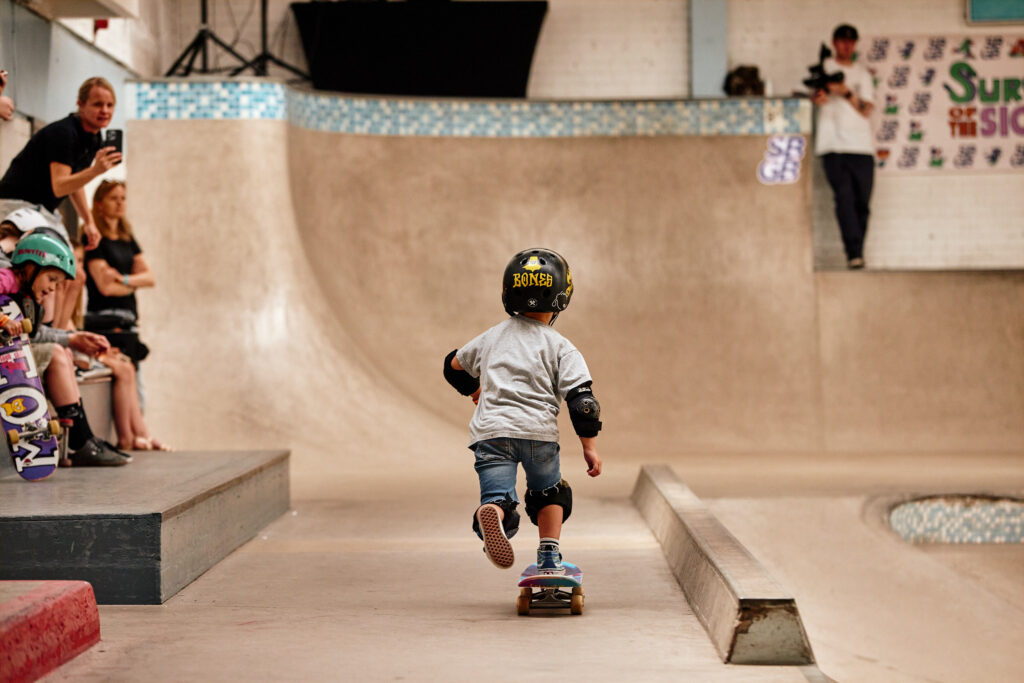
– Managed indoor skateparks are rated safest and best for progression; yet they make up less than 5% of all skateable spaces.
– City‑centre sites, such as those in Nottinghamshire, score highly, while remote or poorly connected parks, for example in the Southwest, reduce accessibility.
– Skateable spaces with established user groups who offer regular lessons and community‑led events also perform strongly on quality indices.
The research shows that Local Authorities who involve user groups early in the design and planning process produce higher‑quality, better‑used, and more meaningful facilities with strong local ownership.
However, the study highlights a major gap: funding rarely extends beyond construction, leaving limited support for coaching, programming, or long‑term community development.
James Hope-Gill, Chief Executive of Skateboard GB, said: “This important study confirms that skateparks can be vital community assets. We hope that this research helps Local Government and skatepark advocates maximise the benefits of these facilities for accessible physical exercise and forming social connections with minimal cost barriers, critical for good mental health. We welcome the evidence on the importance of user‑community engagement, and we will be working hard to support the growth of more skatepark groups nationwide, to ensure people can skate more, skate better wherever they live in the UK.”
Dr Esther Sayers, Senior Lecturer in Education at Goldsmiths, University of London, said, “Skateboarding has grown exponentially in popularity in the last decade in the UK, and particularly since it became an Olympic sport in 2020. There’s an intergenerational community, including families with children, as well as those who started when skateboarding came to UK in the 70s and grew up with it. Since the 2020 Olympics, the number of girls and women skateboarding has increased massively. That’s why it’s important now to understand what infrastructure we have, and how it can support progression and community involvement, and what steps could be taken to improve it.”
Skateboard GB, Goldsmiths, University of London, and Betongpark will continue deeper thematic analysis of the data, with further findings to be released in due course. The project was funded by Sport England.